

Blog
How to Choose a Bengal Breeder

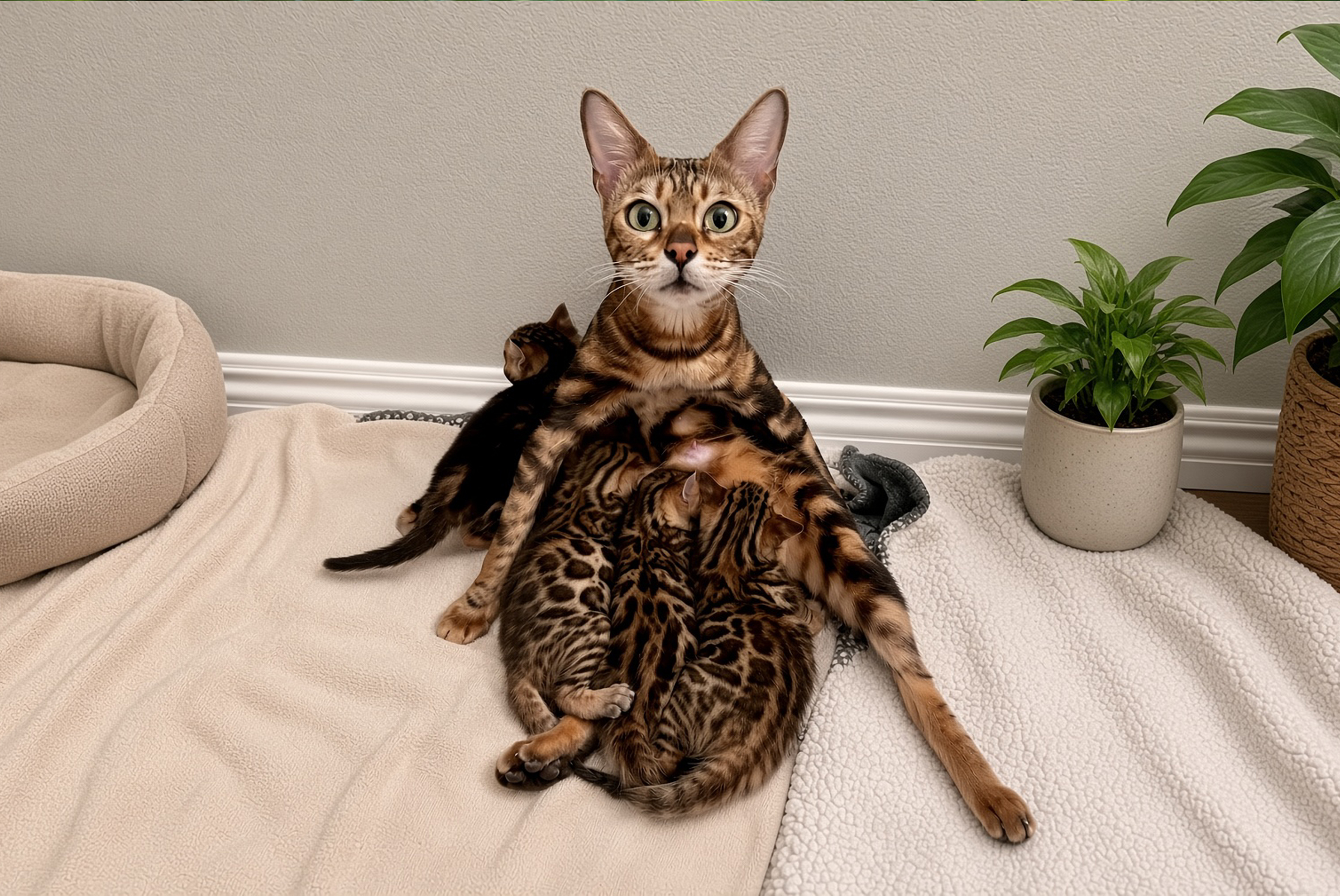
Most people shop for spots. You should shop for how the kitten was raised.
That choice is what decides whether the cat stays healthy and well-adjusted for the next 12 to 16 years.
Bengals are a popular breed, which means there are careful programs and there are people moving kittens quickly. Price alone will not tell you which is which. A very cheap kitten is a warning. A very expensive one is not automatically a good one either.
Start with health, not photos
Ask what they test before they breed, and ask to see results — not a promise that “our lines are healthy.”
- HCM screening on breeding cats (heart ultrasound / echo by a cardiologist, not just a stethoscope).
- PRA-b (and other relevant genetic tests) with lab reports.
- A written health guarantee that says what happens if a problem shows up.
- Kittens stay with the mother and littermates long enough — generally at least 12 weeks, often 13–16 for Bengals.
If they get vague, change the subject, or say testing is unnecessary because they have never had a problem, keep looking.
What a serious program looks like
- You can see how the cats actually live: clean space, room to climb, people who handle the kittens every day.
- You can meet the mother. Meeting the father is not always possible if he lives elsewhere, but they should still tell you who he is and share his health records.
- They register with a real registry (TICA is the usual one for Bengals) and can explain the kitten’s generation. For a pet home, you want a fully domestic SBT kitten, not an early-generation hybrid unless you specifically know what that involves.
- They ask you questions. Work hours, other pets, kids, outdoor plans, whether you want a shadow or a more independent cat. A breeder who never interviews you is selling a product, not placing a kitten.
- There is a contract: spay/neuter for pets, return-to-breeder if you cannot keep the cat, no resale to a third party.
Good breeders are also honest about temperament. Not every Bengal is a Velcro cat. Not every color is available every litter. “Whatever you want, we can have it next week” is not how small, careful programs work.
Questions worth asking
- What health tests do the parents have, and can I see the paperwork?
- How old are kittens when they go home?
- What do you feed, and what vaccines and deworming has this kitten had?
- What are the parents like to live with — energy, voice, interest in water, comfort with people?
- Do you help if the kitten struggles after pickup? Who do I contact?
- If something in the home does not work out, will you take the cat back?
You are also allowed to ask about catio time, leash walking, and how they raise kittens around everyday household noise. That tells you whether the kitten has been prepared for a real home, not only a pretty photo.
Walk away if
- You cannot visit or see a live video of the living space, only stacked glamour shots.
- Kittens are offered under 12 weeks, or “ready this weekend” with no history.
- They will ship with no conversation about your home.
- Payment is only through methods that cannot be traced, or they push you to decide on the first message.
- They dismiss HCM testing, contracts, or questions about the parents.
- The price is far below what reputable Bengal kittens cost in your area. Underpricing is not a sale. It is often a shortcut.
Price in plain terms
A well-raised pet-quality Bengal kitten from a tested program commonly lands in the mid four figures, not a few hundred dollars. Rare colors can cost more. You are paying for the breeding cats’ screening, the months of care, and someone who is still answering your texts in year three.
If the lifestyle already feels like a stretch — high energy, daily play, supervised outdoor time in a catio, cat-proofed yard, or on a leash in a safe dog- and car-free place — fix that before you put a deposit down. The right breeder will wait.
If you are looking at our kittens
We would rather talk through your home than rush a hold. If you want an exotic Bengal kitten, tell us about your hours, other animals, kids, and how you plan to give that cat a job — play, height, and safe time outside.
Ask us the questions on this list. We expect them. If the match is not right, we will say so.
A kitten is easy to want. A good placement takes a little longer.
This is general guidance, not veterinary advice. Health-testing norms can change; ask for current results on the specific breeding cats.